
Missing teeth can affect far more than your smile. They impact your ability to enjoy meals, speak clearly, and feel confident in social situations. For residents of Cookeville and Putnam County, modern denture solutions offer a proven path to restoring both function and quality of life.
Dentures have evolved significantly over the past two decades. Today’s prosthetic options combine advanced materials, precise digital fabrication, and improved retention methods to deliver natural-looking results that feel secure and comfortable. Whether you’re facing complete tooth loss or need to replace several missing teeth, understanding your options helps you make informed decisions about your oral health.
The Cookeville area—spanning from Algood to Baxter and serving the Tennessee Tech University community—offers accessible denture care through experienced providers. According to the Centers for Disease Control and Prevention, approximately 17% of adults aged 65 and older have lost all their natural teeth, making dentures one of the most common restorative dental treatments in America. In Tennessee, where the senior population continues to grow, denture services play a vital role in maintaining quality of life for older adults.
Hayes Family Dentistry’s location near Tennessee Tech University and Cookeville Regional Medical Center positions it uniquely within Cookeville’s healthcare and education corridor. This central placement provides convenient access for families throughout Putnam County, from the residential neighborhoods around Cane Creek Park to the commercial areas near Jackson Plaza and the Shoppes at Eagle Point.
Modern dentures address three fundamental needs: restoring your ability to eat nutritious foods, improving speech clarity, and supporting facial structure. The range of available options—from traditional removable dentures to implant-supported solutions—means that treatment can be tailored to your specific dental condition, budget, and lifestyle preferences.
This comprehensive guide explores everything Cookeville residents need to know about dentures, from understanding different types and the fitting process to costs, care requirements, and alternatives. Whether you’re beginning to research options or preparing for your first consultation, the information ahead will help you navigate your denture journey with confidence.

Table of Contents
Key Takeaways (TL;DR)
Multiple restoration options: Full dentures, partial dentures, and implant-supported solutions address varying degrees of tooth loss with different retention methods and stability levels.
Functional restoration: Modern dentures restore the ability to eat diverse foods, improve speech clarity, and provide essential facial structure support that tooth loss compromises.
Accessible local care: Cookeville and surrounding communities including Algood, Baxter, and the Tennessee Tech University area have convenient access to comprehensive denture services.
Insurance coverage available: Most dental insurance plans cover 50% or more of denture costs, with typical ranges from $1,000–$3,000 per arch for conventional dentures.
Expected lifespan: With proper care and periodic adjustments, dentures typically last 5–10 years before requiring replacement, with relining procedures extending usability.
Adaptation period required: Most patients achieve full comfort and function within 4–8 weeks, with initial adjustments for fit refinement during the first few months.
What Are Dentures and How Do They Work?
Dentures are removable prosthetic appliances designed to replace missing teeth and restore oral function. These custom-fabricated devices consist of artificial teeth set in a gum-colored base material, typically made from acrylic resin or a combination of acrylic and metal. The base is carefully shaped to fit over the gums and, in the case of upper dentures, the roof of the mouth. Modern denture teeth are crafted from either porcelain or composite resin materials that mimic the translucency and appearance of natural tooth enamel.
The primary mechanism by which dentures stay in place relies on several factors working together. Upper dentures create suction against the palate and ridge of the upper jaw, forming a seal that helps keep them stable during normal function. Lower dentures rest on the lower jaw ridge and are held in position by the tongue, cheek muscles, and precise fitting along the bony ridge. Some patients choose to enhance retention with denture adhesives, which provide additional grip and security, particularly during the adaptation period or as natural bone changes occur over time.
According to the American Dental Association, dentures serve four essential functional goals: restoring the ability to chew food properly, enabling clear speech, maintaining facial aesthetics by supporting lips and cheeks, and preventing remaining teeth from shifting in cases of partial tooth loss. The evolution of denture materials has been significant—while early dentures were heavy and uncomfortable, contemporary versions use lightweight acrylics that distribute pressure evenly and digital design technologies that ensure precise fit. This combination of improved materials and fabrication methods has made modern dentures more comfortable and natural-looking than ever before, allowing patients to eat, speak, and smile with greater confidence.
Types of Dentures Available in Cookeville
Understanding the different types of dentures helps patients and their dental providers determine the most appropriate solution for each unique situation. The choice depends on how many teeth are missing, the condition of remaining teeth, jawbone health, budget considerations, and personal preferences regarding stability and maintenance.
Full (Complete) Dentures are designed for patients who have lost all teeth in either the upper arch, lower arch, or both. These dentures replace an entire set of teeth and rest directly on the gum tissue and underlying bone ridge. Upper complete dentures cover the palate and create suction for retention, while lower dentures are horseshoe-shaped to accommodate the tongue. Full dentures are typically recommended after all remaining teeth have been extracted and the gum tissue has fully healed, a process that usually takes several months. They offer a cost-effective solution for complete tooth replacement and can dramatically improve quality of life for patients experiencing severe tooth loss.
Partial Dentures fill the gaps created by one or more missing teeth while the patient retains some healthy natural teeth. These removable appliances consist of replacement teeth attached to a gum-colored plastic base, which is connected by a metal or flexible resin framework. Metal clasps or precision attachments anchor the partial denture to adjacent natural teeth, providing stability during chewing and speaking. Partial dentures not only restore function and appearance but also prevent remaining natural teeth from shifting out of position, which can lead to bite problems and additional tooth loss over time.
Implant-Supported Dentures represent a significant advancement in denture technology, combining the coverage of traditional dentures with the stability of dental implants. In this approach, several dental implants are surgically placed into the jawbone to serve as anchors. The denture then attaches to these implants either through a snap-on mechanism or a fixed attachment. This option provides superior retention compared to conventional dentures, reduces bone loss by stimulating the jawbone, and eliminates concerns about dentures slipping during eating or speaking. While implant-supported dentures require adequate bone density and involve a surgical procedure, many Cookeville providers offer this option for patients seeking maximum stability and longevity.
Immediate Dentures are placed on the same day that remaining teeth are extracted, allowing patients to avoid being without teeth during the healing period. These dentures are fabricated in advance based on measurements and models taken while natural teeth are still present. While immediate dentures provide the psychological and social benefit of continuous tooth replacement, they require more frequent adjustments during the first few months as gums and bone reshape during healing. Most patients who receive immediate dentures will eventually need a permanent denture or reline once tissues have fully stabilized, typically three to six months after extractions.
Overdentures are a specialized type of denture that fits over a small number of remaining natural tooth roots or dental implants. The preserved roots or implants provide additional support and help maintain bone structure that would otherwise be lost. Overdentures offer improved stability compared to conventional dentures while being less invasive and costly than full implant-supported solutions. This option works well for patients who have a few healthy tooth roots that can be preserved or who want some implant support without the expense of a full implant-retained prosthesis.
Each denture type offers distinct advantages and considerations. Conventional full and partial dentures provide proven, cost-effective solutions that most dental insurance plans cover substantially. Implant-supported options require greater initial investment but deliver superior stability and help preserve jawbone structure. The choice often involves balancing clinical factors such as bone density and oral health status with practical considerations including budget, treatment timeline, and desired level of stability.
Benefits of Dentures
Dentures provide far-reaching benefits that extend well beyond simply filling gaps in your smile. For Cookeville residents dealing with significant tooth loss, modern dentures offer comprehensive restoration of oral function, facial aesthetics, and overall quality of life.
📊 Research Insight: According to studies published in the Journal of Prosthetic Dentistry, patients who receive well-fitted dentures report significant improvements in their ability to consume a varied diet, with particular gains in eating fruits, vegetables, and protein-rich foods that are essential for maintaining overall health in older adults.
Restored Chewing Function
One of the most immediate and noticeable benefits of dentures is the restoration of chewing ability. Missing teeth significantly limit food choices, often forcing people to avoid nutritious whole foods like fresh vegetables, lean meats, and whole grains. This dietary restriction can lead to nutritional deficiencies and related health problems. Properly fitted dentures allow patients to return to eating a diverse, balanced diet. While there is an adjustment period during which patients learn to chew effectively with dentures, most people adapt within several weeks and regain the ability to enjoy foods they had abandoned.
Improved Speech Clarity
Teeth play a crucial role in forming certain sounds, particularly those involving “s,” “th,” and “f” sounds. Significant tooth loss can cause slurred speech, whistling sounds, or difficulty being understood clearly. Dentures restore the proper positioning needed for clear articulation. The upper denture, which covers the palate, provides a surface against which the tongue can form sounds more precisely. While speaking with new dentures requires practice—similar to learning with any oral appliance—most patients notice substantial improvement in speech clarity within the first month of consistent wear.
Enhanced Facial Aesthetics and Structure
Tooth loss leads to a phenomenon dental professionals call facial collapse. Without teeth to support the lips and cheeks, the lower face appears sunken, creating a prematurely aged appearance with deep wrinkles around the mouth. The jawbone also begins to shrink when teeth are no longer present to stimulate it through chewing forces. Dentures provide the necessary support to restore facial contours, fill out the lips and cheeks, and maintain a more youthful facial profile. This structural support can take years off a person’s appearance and significantly improve how they feel about their looks.
Key Functional Benefits at a Glance
🍽 Nutritional Access: Return to eating fruits, vegetables, whole grains, and protein-rich foods
💬 Communication: Clear pronunciation of challenging sounds (s, th, f, v)
👤 Facial Support: Prevention of sunken appearance and premature facial aging
🦴 Bone Preservation: Implant-supported dentures stimulate jawbone and slow resorption
😊 Confidence Boost: Renewed ability to smile, laugh, and interact socially without hesitation
Psychological and Social Benefits
The psychological impact of tooth loss extends far beyond physical function. Many people with missing teeth experience embarrassment, social anxiety, and reduced self-confidence. They may avoid smiling in photographs, decline social invitations, or feel self-conscious during conversations. Research consistently shows that restoring missing teeth through dentures leads to measurable improvements in self-esteem, social engagement, and overall psychological well-being. Patients report feeling more comfortable in professional settings, more confident in personal relationships, and more willing to participate in activities they had avoided.
Cost-Effective Comprehensive Solution
Compared to replacing multiple individual teeth with bridges or implants, dentures offer a more economical option for addressing extensive tooth loss. A complete denture can replace an entire arch of teeth for a fraction of the cost of multiple individual restorations. Most dental insurance plans provide substantial coverage for dentures, typically covering 50% or more of the cost after deductibles. For Cookeville residents on fixed incomes or managing healthcare budgets, dentures provide a financially accessible path to comprehensive dental restoration.
Modern Aesthetics and Comfort
Today’s dentures bear little resemblance to the artificial-looking, uncomfortable appliances of previous generations. Advanced materials and digital design technologies have transformed denture aesthetics and function. Modern acrylic resins can be color-matched and contoured to create highly natural-looking gum tissue. Denture teeth are available in various shapes, sizes, and shades to match each patient’s facial features and desired appearance. Computer-aided design ensures precise fit and balanced occlusion. The result is a prosthetic that looks natural, feels comfortable, and functions effectively for daily activities.
Who Is a Good Candidate for Dentures?
Determining candidacy for dentures involves evaluating both the extent of tooth loss and the overall health of oral tissues and supporting structures. While dentures can benefit many people experiencing significant tooth loss, certain clinical and health factors influence treatment success and the most appropriate denture type for each individual.
Common Scenarios Leading to Denture Treatment
Several dental conditions commonly lead patients to consider dentures. Extensive tooth decay that has progressed beyond the point where individual teeth can be saved often necessitates extraction and full-arch replacement. Advanced periodontal disease (gum disease) can cause severe bone loss and tooth mobility, eventually requiring removal of compromised teeth. Dental trauma from accidents or injuries may result in the loss of multiple teeth that cannot be successfully reimplanted or restored. Failed previous dental work, such as broken bridges or failing root canals across multiple teeth, sometimes makes dentures a more practical solution than attempting to salvage individual restorations. Additionally, some patients are born with congenital conditions affecting tooth development, leading to missing or malformed teeth that dentures can replace.
📈 Prevalence Data: According to the Centers for Disease Control and Prevention, approximately 17% of adults aged 65 and older in the United States have lost all their natural teeth (edentulism). In Tennessee, rates of complete tooth loss among seniors align closely with national averages, highlighting the widespread need for denture services throughout communities like Cookeville and Putnam County.
Oral Health Requirements
Successful denture treatment requires adequate oral tissue health. Healthy gum tissue is essential for supporting conventional dentures and ensuring patient comfort. Active gum infections must be treated and resolved before denture fabrication begins. Sufficient bone structure in the jaw ridges provides the foundation for denture retention and stability. While some bone loss is normal after tooth extraction, extreme resorption may require bone grafting procedures or may indicate that implant-supported dentures would be a more stable option than conventional dentures.
The condition of remaining teeth also plays a crucial role in determining candidacy, particularly for partial dentures. Teeth that will serve as anchor points for partial denture clasps must be structurally sound, with healthy roots and adequate bone support. If remaining teeth are severely decayed or loose, they may need treatment or extraction before proceeding with denture fabrication.
Medical Considerations
Certain medical conditions require careful evaluation before denture treatment. Uncontrolled diabetes can impair healing after tooth extractions and increase the risk of oral infections, though well-managed diabetes does not preclude denture treatment. Patients who have undergone radiation therapy to the head and neck may experience tissue changes that affect denture fitting and require specialized approaches. Severe dry mouth (xerostomia) from medications or medical conditions can make denture retention more challenging, though saliva substitutes and frequent adjustments can help manage this issue.
Bleeding disorders and patients taking blood-thinning medications need special consideration if extractions are required, though denture fitting itself does not pose bleeding risks. Immune system disorders may affect healing and susceptibility to oral infections, requiring closer monitoring during the adaptation period. A thorough medical history review helps dental providers anticipate potential complications and adjust treatment plans accordingly.
Age Considerations
While dentures are commonly associated with older adults, age alone does not determine candidacy. Tooth loss can affect people at any stage of life due to disease, trauma, or congenital conditions. Younger patients may be excellent candidates for dentures following accidents, aggressive periodontal disease, or severe decay related to medical treatments. In fact, younger patients often adapt more quickly to dentures and may be ideal candidates for implant-supported options that provide long-term stability.
Older adults represent the largest group of denture wearers, as tooth loss prevalence increases with age. However, many seniors maintain excellent oral health well into their later years. For those who do experience significant tooth loss, modern dentures can dramatically improve quality of life. Considerations for older patients may include dexterity issues affecting denture handling and cleaning, cognitive factors influencing adaptation, and the presence of multiple medical conditions requiring medication management.
The Evaluation Process
Determining denture candidacy begins with a comprehensive dental examination. This evaluation typically includes a clinical assessment of remaining teeth, gum tissue health, and jawbone structure. Dental radiographs (X-rays) provide detailed information about bone levels, tooth roots, and any underlying pathology that may affect treatment. A medical and dental history review identifies conditions or medications that could impact healing, retention, or overall success.
The dental provider also discusses the patient’s functional goals and expectations. Understanding what the patient hopes to achieve—whether it’s improved eating ability, better appearance, or enhanced confidence—helps guide treatment planning. This conversation also provides an opportunity to discuss realistic expectations, as dentures, while highly functional, do not perfectly replicate natural teeth. Setting appropriate expectations from the beginning contributes significantly to patient satisfaction with the final result.
✓ Candidacy Checklist
Consider dentures if you experience:
- Multiple missing teeth affecting eating or speaking ability
- Advanced gum disease causing tooth mobility or bone loss
- Extensive tooth decay beyond the point of individual restoration
- Failed dental work across several teeth
- Difficulty affording multiple individual tooth replacements
- Desire for comprehensive restoration with a single appliance
- Self-consciousness about gaps or missing teeth
The Denture Process: What to Expect in Cookeville
Understanding the denture fabrication process helps patients prepare for what lies ahead and sets realistic expectations for the timeline and number of appointments required. While the specific steps may vary slightly depending on whether you’re receiving full dentures, partial dentures, or implant-supported dentures, the fundamental process follows a carefully sequenced protocol designed to ensure optimal fit, function, and appearance.
⏱ Timeline Overview
The complete denture process typically requires 4–8 weeks from initial consultation to final delivery, with 4–6 appointments scheduled throughout this period. Immediate dentures can be placed the same day as extractions, while conventional dentures require waiting 8–12 weeks after extractions for complete healing before beginning the fabrication process.
Step 1: Initial Consultation and Examination
The journey begins with a comprehensive examination where your dental provider assesses your oral health status, discusses your needs and goals, and develops a treatment plan. During this visit, the dentist examines remaining teeth, evaluates gum tissue health, and reviews dental radiographs to assess bone structure. If tooth extractions are necessary, these will be scheduled and completed before proceeding with denture fabrication for conventional dentures. The provider also discusses denture options, expected outcomes, costs, and timeline during this initial consultation.
Step 2: Preliminary Impressions
Once your mouth is ready for denture fabrication—either immediately or after extraction sites have healed—the process begins with preliminary impressions. Using stock trays and alginate impression material, the dental provider captures the general shape and size of your upper and lower jaw ridges. These initial impressions serve as the foundation for creating custom impression trays specifically designed to fit your mouth precisely. The custom trays will be used in the next appointment for more detailed impressions.
Step 3: Final Impressions and Bite Registration
At the second appointment, the dental provider uses the custom trays fabricated from your preliminary impressions to capture highly detailed final impressions. These impressions record the exact contours of your gum tissue and the specific anatomy of your jaw ridges, including any undercuts or irregular areas that will affect denture retention. During this same visit, the provider also records your bite relationship—how your upper and lower jaws come together when you close your mouth. This involves using wax rims built to the approximate height of your natural teeth, allowing the dentist to establish the proper vertical dimension (how far apart your jaws should be) and the relationship between upper and lower arches.
📋 The Denture Fabrication Journey
Appointment 1: Examination, treatment planning, preliminary impressions
Appointment 2: Final impressions using custom trays, bite registration with wax rims
Appointment 3: Try-in of denture setup in wax, evaluate tooth position, size, shape, and color
Appointment 4: Delivery of completed dentures, insertion training, initial adjustments
Follow-up Visits: Adjustment appointments within first weeks to address sore spots and refine fit
Step 4: Try-In Appointment (Wax Try-In)
The try-in appointment is a critical step where you see your dentures for the first time—though they’re still in a temporary wax form rather than finished acrylic. The dental laboratory has set artificial teeth in wax based on the impressions and bite records from your previous appointment. During this visit, you’ll try on the wax dentures while the dentist evaluates multiple factors: proper fit against your gum tissue, correct bite relationship between upper and lower teeth, appropriate tooth position for speech and function, natural appearance of tooth size and arrangement, and overall esthetics including lip support and facial contours.
This is your opportunity to provide feedback about the appearance of your dentures. You can request changes to tooth color, shape, or arrangement before the dentures are processed into their final form. The provider will also have you speak certain words and phrases to ensure the tooth positions support clear speech. Any necessary adjustments are marked and sent back to the laboratory before final processing.
Step 5: Processing and Laboratory Fabrication
After you approve the wax try-in, the dentures return to the dental laboratory for final processing. The laboratory technician carefully removes the teeth from the wax setup, creates a mold, and processes the denture base in acrylic resin. This involves packing acrylic into the mold, curing it under heat and pressure, and then finishing and polishing the completed denture. The teeth are permanently set into the processed acrylic base. This laboratory phase typically takes one to two weeks, during which the technician ensures proper curing, smooth finishing, and high polish for patient comfort and esthetics.
Step 6: Delivery Appointment
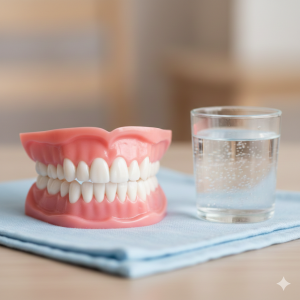 The delivery appointment is when you receive your completed dentures. The dental provider first checks the fit and makes any necessary adjustments before placing the dentures in your mouth. Once inserted, the dentist evaluates retention, stability, bite relationship, and overall comfort. You’ll receive detailed instructions on how to insert and remove your dentures, proper cleaning techniques, when to wear them, and what to expect during the adaptation period. The provider also schedules follow-up appointments and provides guidance on managing common initial challenges such as increased saliva production, minor soreness, or speech changes.
Step 7: Follow-Up Adjustments
Follow-up visits during the first few weeks are essential for optimal denture function and comfort. As you begin wearing your dentures regularly, certain areas may develop sore spots where the denture applies excessive pressure to your gum tissue. These appointments allow the dentist to identify and relieve these pressure points through careful adjustment of the denture base. Most patients require two to three adjustment visits during the first month. These appointments are typically brief and provide immediate relief from any discomfort.
🏥 Local Access Note: Cookeville’s central location along I-40 and proximity to Tennessee Tech University and Cookeville Regional Medical Center makes denture appointments convenient for residents throughout Putnam County. Patients from Algood, Baxter, and surrounding areas can easily access denture services near major commercial areas like Jackson Plaza and the Shoppes at Eagle Point, with multiple appointment times typically available to accommodate work schedules and family commitments.
Long-Term Maintenance and Relines
Even after the initial adaptation period, dentures require ongoing care and periodic adjustments. The shape of your jaw ridges changes over time as bone naturally resorbs—a process that occurs in all denture wearers but progresses more quickly in the first year after tooth loss. As these changes occur, dentures may become loose and require relining to restore proper fit. A reline involves adding new base material to the tissue side of the denture, essentially refitting it to your current ridge shape. Most denture wearers need a reline every two to three years. Some patients may eventually need denture replacement after five to ten years of use, depending on wear patterns and the extent of jaw ridge changes.
Cost and Insurance Considerations
Understanding the financial aspects of denture treatment helps patients plan appropriately and make informed decisions about which type of denture best fits their budget and needs. Denture costs vary considerably based on the type of denture, materials used, complexity of the case, and geographic location.
Full Denture Costs
Complete dentures for a single arch (upper or lower) typically range from $1,000 to $3,000, with most patients paying between $1,500 and $2,500 for a quality denture using standard acrylic materials. Premium dentures featuring higher-quality teeth, better aesthetics, and more customized fabrication may cost $3,000 to $5,000 per arch. These higher-end options often include teeth that more closely mimic natural enamel translucency and more individualized tooth arrangement for optimal appearance. If you need both upper and lower dentures, expect to double these figures, resulting in total costs ranging from $2,000 to $10,000 for complete upper and lower sets.
Partial Denture Costs
Partial dentures show more price variation depending on the framework material and design complexity. Basic acrylic partial dentures with wire clasps typically cost $700 to $1,800. Cast metal framework partials, which offer superior strength, better fit, and longer lifespan, generally range from $1,500 to $2,500. Flexible partial dentures made from thermoplastic materials that eliminate visible metal clasps usually fall in the $1,200 to $2,000 range. Precision attachment partials, which use hidden connectors rather than visible clasps for improved aesthetics, may cost $2,000 to $3,500 depending on the number of teeth being replaced and the complexity of the attachments.
Implant-Supported Denture Costs
Implant-supported dentures involve significantly higher costs due to the surgical placement of dental implants and the specialized denture attachments required. A snap-on overdenture supported by two to four implants typically ranges from $5,000 to $15,000 per arch, including both the implant surgery and the denture fabrication. Fixed implant-supported dentures (such as All-on-4 or similar concepts) that are permanently attached to four to six implants per arch generally cost $15,000 to $30,000 or more per arch. While these represent substantial investments, implant-supported options offer superior stability, help preserve jawbone, and often last considerably longer than conventional dentures.
Dental Insurance Coverage
Most dental insurance plans classify dentures as a major service and provide coverage ranging from 50% to 80% of the allowed amount after the deductible has been met. However, several important factors affect actual coverage. Annual maximum benefits typically range from $1,000 to $2,000 per year, which may not fully cover the cost of dentures, particularly if you need both upper and lower dentures or require extractions and other preparatory work. Waiting periods are common for major services like dentures, often requiring 6 to 12 months of continuous coverage before benefits become available for prosthetic treatment.
Replacement limitations apply to most plans, typically allowing coverage for new dentures only once every five to seven years. If you need dentures replaced sooner due to damage or changes in fit, you may be responsible for the full cost unless the dentures are less than 90 days old and require replacement due to fabrication defects. Some plans also have specific exclusions for premium materials or cosmetic upgrades, covering only basic denture options.
💡 Insurance Tip
If denture treatment will exceed your annual insurance maximum, consider timing the procedure across two benefit years. For example, complete preliminary appointments and extractions in one calendar year, then fabricate and deliver the dentures in the following year. This strategy allows you to access benefits from two separate annual maximums, significantly reducing out-of-pocket expenses.
Medicare and Medicaid Coverage
Traditional Medicare (Parts A and B) does not cover routine dental care, including dentures, under most circumstances. The primary exception involves dentures required as part of covered inpatient hospital care, such as jaw reconstruction following an accident or oral cancer treatment. Medicare Advantage plans (Part C) offered by private insurers may include some dental benefits, though coverage varies widely by plan and typically includes annual maximums similar to private dental insurance.
Medicaid dental coverage varies significantly by state. In Tennessee, TennCare (the state’s Medicaid program) provides limited dental coverage for adults, with more comprehensive benefits for children. Adult coverage typically focuses on emergency services and extractions, with denture coverage available in some circumstances but subject to specific eligibility criteria and prior authorization requirements. Patients with Medicaid should verify their specific benefits and denture coverage with their plan administrator.
Financing and Payment Options
For patients facing significant out-of-pocket costs, several financing options can make denture treatment more accessible. Third-party healthcare financing companies such as CareCredit offer payment plans specifically designed for dental procedures, often with promotional interest-free periods ranging from 6 to 24 months for qualified applicants. These plans allow patients to spread denture costs over manageable monthly payments.
In-house payment plans offered by some dental practices allow patients to make payments directly to the dental office over an agreed-upon timeframe. Terms vary by practice but may include no-interest or low-interest options for patients who commit to regular monthly payments. Dental discount plans, while not insurance, provide reduced fees for members at participating dental offices in exchange for an annual membership fee. These plans can offer 10% to 60% savings on denture costs and may be beneficial for patients without dental insurance.
Additional Costs to Consider
Beyond the denture fabrication itself, several related expenses may apply. Tooth extractions preceding denture treatment typically cost $75 to $300 per tooth depending on complexity, with surgical extractions at the higher end of this range. Immediate dentures may cost 10% to 20% more than conventional dentures due to the additional appointments and fabrication complexity. Denture adhesives for daily use cost approximately $5 to $15 per tube and may last several weeks. Relines needed every few years to maintain proper fit range from $200 to $500 depending on whether a chairside or laboratory reline is performed. Denture repairs for cracks, broken teeth, or other damage typically cost $100 to $300 depending on the extent of repair needed.
💰 Budgeting for Dentures: Total Cost Estimate
For a patient needing complete upper and lower dentures with some extractions:
- Extractions (6-8 teeth): $600–$2,400
- Upper denture: $1,500–$2,500
- Lower denture: $1,500–$2,500
- Follow-up adjustments: Often included in initial fee
- Total estimated cost: $3,600–$7,400
- With 50% insurance coverage: $1,800–$3,700 out-of-pocket
Note: Costs may be lower in the Cookeville area compared to major metropolitan markets, while maintaining quality care standards.
Caring for Your Dentures
Proper denture care is essential for maintaining oral health, extending the lifespan of your dentures, and ensuring optimal comfort and function. While dentures are durable prosthetic devices, they require daily maintenance and careful handling to prevent damage, staining, and bacterial buildup.
Daily Cleaning Routine
Remove your dentures and rinse them under running water after every meal to remove loose food particles and debris. At least once daily—preferably before bedtime—brush all denture surfaces thoroughly with a soft-bristled denture brush and denture cleaning paste or mild dish soap. Regular toothpaste should be avoided as it contains abrasives that can scratch denture surfaces, creating microscopic grooves where bacteria and stains can accumulate. These scratches also dull the polish and make dentures appear aged prematurely.
When brushing dentures, hold them over a towel or basin of water to prevent breakage if you accidentally drop them. Pay particular attention to the tissue-contacting surface where food particles and plaque tend to accumulate, as well as any metal clasps on partial dentures. Use gentle circular motions rather than aggressive scrubbing, as excessive force can damage denture materials or loosen teeth from the acrylic base.
✓ Daily Denture Care Checklist
Morning: Rinse dentures thoroughly after overnight soaking, brush gently, rinse mouth before insertion
After Meals: Remove and rinse dentures under running water to remove food debris
Evening: Brush all denture surfaces with denture brush and appropriate cleaner
Nighttime: Soak dentures in denture cleaning solution or plain water in covered container
Oral Care: Clean gums, tongue, and palate with soft brush before reinserting dentures
Overnight Soaking
The American Dental Association recommends removing dentures for at least six to eight hours daily, typically overnight, to allow gum tissues to rest and recover from the pressure of denture wear. During this time, dentures should be kept moist to prevent warping or cracking that can occur when acrylic dries out. Place dentures in a covered container filled with room-temperature water or a denture soaking solution specifically formulated for overnight use.
Denture soaking solutions serve multiple purposes: they help loosen stubborn debris and stains, kill bacteria that accumulate on denture surfaces, and keep dentures properly hydrated. Effervescent tablet cleansers are popular and effective when used as directed. Avoid using hot water for soaking, as high temperatures can warp acrylic denture bases and compromise fit. Never leave dentures out of water for extended periods, and avoid exposing them to direct sunlight or heat sources.
Handling and Storage
Dentures are more fragile than natural teeth and can crack or break if dropped onto hard surfaces. Always handle dentures over a soft towel, padded surface, or basin filled with water to cushion any accidental drops. When not wearing your dentures, store them in their designated container filled with water or soaking solution, placed in a safe location away from children and pets. Never wrap dentures in tissue or napkins, as they may be accidentally discarded, and avoid placing them in pockets where they can be crushed or bent.
Cleaning Your Mouth
Oral hygiene doesn’t stop with denture care—you must also clean the soft tissues in your mouth. Every morning and evening, before reinserting your dentures, use a very soft toothbrush or gauze pad to gently clean your gums, tongue, and the roof of your mouth. This removes plaque and stimulates circulation in the gum tissues, promoting oral health and fresher breath. If you have remaining natural teeth, brush and floss them thoroughly using regular oral hygiene techniques.
Denture Adhesive Use
Denture adhesives can provide additional retention and stability, particularly for lower dentures which naturally have less suction than uppers. However, adhesives should enhance—not replace—proper denture fit. Well-fitting dentures require minimal adhesive if any. If you find yourself using increasing amounts of adhesive to keep dentures in place, this indicates that your dentures need professional adjustment or relining rather than more adhesive.
When using adhesive, apply it sparingly in small dots or thin strips on clean, dry denture surfaces. Excessive adhesive can ooze out around denture borders and may actually reduce retention. Remove all adhesive residue from both the denture and your mouth daily during cleaning. Some patients find that adhesive powder offers easier cleanup than paste or strip formulations.
Regular Professional Check-Ups
Even if your dentures feel comfortable, schedule annual dental examinations to monitor oral health and denture condition. During these visits, your dentist examines the soft tissues of your mouth for any irritation, sores, or abnormal changes that could indicate ill-fitting dentures or, in rare cases, oral cancer. The dentist also evaluates denture fit, checks for cracks or wear in the denture material, and determines whether relining is needed to compensate for changes in jaw ridge shape.
Expected Denture Lifespan
With proper care and periodic professional maintenance, dentures typically last five to ten years before requiring replacement. Several factors influence longevity: the quality of materials and fabrication, how well you maintain the dentures through daily cleaning, the extent of jaw ridge changes over time, and wear patterns from chewing. Denture teeth gradually wear down from normal use, acrylic bases can develop small cracks, and continued bone resorption eventually makes even relined dentures unstable and uncomfortable.
Relining procedures extend denture life by refitting the tissue surface to current ridge contours. Most patients need a reline every two to three years. Hard relines performed in a dental laboratory last longer than soft relines or chairside procedures but require being without dentures for a day or two while the laboratory processes the new base material. Eventually, when dentures become excessively worn, deeply stained, or can no longer be adequately relined, replacement becomes necessary to maintain proper function and appearance.
🏥 Local Tip for Cookeville Residents: Keep your dentist’s contact information readily available for denture emergencies such as breaks, lost dentures, or sudden fit changes. Many Cookeville dental practices offer same-day or next-day appointments for denture repairs and adjustments, minimizing the time you need to be without your prosthesis. Practices near Tennessee Tech University and along the South Willow Avenue corridor typically maintain flexible scheduling to accommodate urgent denture needs.
Alternatives to Traditional Dentures
While conventional removable dentures provide an effective solution for many patients experiencing tooth loss, several alternative treatments offer different advantages in terms of stability, permanence, and bone preservation. Understanding these options helps patients make informed decisions about which approach best meets their individual needs, budget, and long-term oral health goals.
Dental Implants for Individual Tooth Replacement
For patients missing one to several teeth rather than complete arches, individual dental implants offer the most natural-feeling replacement option. A dental implant consists of a titanium post surgically placed into the jawbone that serves as an artificial tooth root. After a healing period of several months during which the bone fuses to the implant surface, a custom crown is attached to restore the visible portion of the tooth. Unlike dentures, dental implants are permanent fixtures that don’t require removal for cleaning and function virtually identically to natural teeth.
Dental implants provide several distinct advantages: they preserve jawbone by providing the stimulation that natural tooth roots once supplied, they don’t require modification of adjacent healthy teeth as bridges do, and they offer superior chewing force compared to removable prosthetics. However, implants require adequate bone density, involve surgical procedures, and represent a significant financial investment, typically ranging from $3,000 to $6,000 per tooth including the implant, abutment, and crown.
Implant-Supported Overdentures
Implant-supported overdentures represent a middle ground between conventional removable dentures and fixed implant restorations. This approach uses two to four dental implants per arch to anchor a removable denture through snap-on attachments or a bar-and-clip retention system. Patients can remove the denture for cleaning, but it remains much more stable during eating and speaking than conventional dentures that rely solely on suction and anatomical fit.
The lower arch particularly benefits from implant-supported overdentures, as conventional lower dentures often struggle with retention due to limited surface area and tongue movement. Two implants placed in the front portion of the lower jaw dramatically improve stability at a more accessible cost point than full fixed implant bridges. Implant overdentures also help slow bone loss compared to conventional dentures, though not as effectively as fixed implant restorations or individual implants.
All-on-4 and Fixed Hybrid Dentures
The All-on-4 concept and similar fixed hybrid approaches use four to six strategically placed dental implants to support a full arch of fixed (non-removable) teeth. This technique often allows treatment even when bone density is compromised by angling posterior implants to engage available bone and avoid anatomical structures like sinuses. The prosthesis is permanently attached to the implants, functioning like natural teeth without the need for daily removal.
Fixed hybrid dentures offer maximum stability and the most natural feeling of any tooth replacement option for complete arch restoration. Patients can eat virtually any food without concern about denture movement, and speech typically remains unaffected by the prosthesis. The fixed nature eliminates concerns about denture adhesives, social embarrassment from slipping dentures, and the bulk of palatal coverage on upper prostheses. However, these solutions require surgical placement of multiple implants, involve higher costs typically ranging from $15,000 to $30,000 per arch, and demand meticulous oral hygiene to maintain health of tissues around implants.
Fixed Dental Bridges
For patients missing one to four consecutive teeth who have healthy natural teeth on either side of the gap, fixed dental bridges offer a non-removable solution without implant surgery. A traditional bridge consists of artificial teeth (pontics) fused to dental crowns that are cemented onto the adjacent natural teeth. These anchor teeth are prepared by removing some enamel to accommodate the crowns, permanently altering their structure.
Bridges restore function and appearance effectively and cost less than individual implants for each missing tooth, typically ranging from $2,000 to $5,000 for a three-unit bridge. However, bridges require compromising healthy tooth structure on adjacent teeth, don’t prevent bone loss in the area of missing teeth, and place additional stress on the supporting teeth which can lead to problems over time. With proper care, bridges typically last 10 to 15 years before requiring replacement.
Comparing Success Rates and Longevity
Research published in dental literature provides insight into the long-term success of various tooth replacement options. Individual dental implants demonstrate success rates exceeding 95% at ten years when properly placed and maintained. Fixed implant-supported full arch restorations show similarly high success rates, though they require diligent oral hygiene and regular professional maintenance to prevent peri-implantitis (inflammation around implants).
Conventional dentures, while not subject to “failure” in the same way implants can fail through loss of integration, do require periodic relining and eventual replacement as jaw ridges change shape. Studies indicate that denture wearers experience continued bone resorption at rates of 0.5 to 1.0 millimeter per year, with more rapid loss in the first year following tooth extraction. This ongoing bone loss eventually compromises denture retention and necessitates replacement even when the denture itself remains structurally sound.
🔬 Research Insight: Bone Preservation
According to research from the American College of Prosthodontists, patients who wear conventional dentures experience significantly more jawbone resorption over time compared to those with implant-supported restorations. Dental implants mimic natural tooth roots by transferring chewing forces into the jawbone, stimulating bone maintenance through a process called mechanical loading. This bone-preserving benefit represents one of the most significant long-term advantages of implant-based tooth replacement options.
Making the Right Choice for Your Situation
Selecting among these alternatives involves balancing multiple factors. Clinical considerations include the number and location of missing teeth, bone density and gum tissue health, and any medical conditions affecting healing or implant candidacy. Financial factors encompass not only initial treatment costs but also long-term maintenance expenses and the potential for insurance coverage, which typically favors conventional dentures over implant-based solutions.
Lifestyle preferences also play an important role. Patients who prioritize convenience and want to avoid surgical procedures may prefer conventional or partial dentures despite their limitations. Those willing to invest more initially for superior long-term function and bone preservation may choose implant-supported options. Some patients pursue a staged approach, starting with conventional dentures and later converting to implant-supported restorations once they’ve adjusted to denture wear and saved additional funds for implant treatment.
Cookeville area residents have access to comprehensive tooth replacement options through local dental providers. Consulting with a dentist experienced in both conventional prosthetics and implant dentistry ensures you receive objective guidance about which approach best suits your unique situation, supporting informed decision-making about your oral health investment.
Common Denture Problems and Solutions
Even well-fitted dentures can present challenges, particularly during the initial adjustment period or as changes occur in oral tissues over time. Understanding common problems and their solutions helps patients address issues promptly and maintain optimal denture function and comfort.
Sore Spots and Pressure Points
Sore spots represent the most common complaint among new denture wearers. These painful areas develop when the denture applies uneven pressure to specific points on the gum tissue, causing irritation, redness, and sometimes ulceration. Sore spots typically emerge within the first few days of wearing new dentures as you begin using them for extended periods and applying chewing forces.
The solution involves professional adjustment. Your dentist identifies the precise location causing discomfort and carefully removes small amounts of acrylic from the denture base in that area, redistributing pressure more evenly. Most sore spots resolve after one or two adjustment appointments. During the adjustment period, you can manage discomfort by removing the dentures periodically to give tissues time to recover, rinsing with warm salt water several times daily, and avoiding hard or chewy foods that place excessive pressure on tender areas. If a sore spot persists despite adjustments or appears to be getting worse, contact your dentist promptly, as continuing to wear dentures with persistent irritation can lead to more serious tissue damage.
⚠️ When to Call Your Dentist Immediately:
- Severe pain that doesn’t improve when dentures are removed
- Visible sores or ulcers that don’t heal within a few days
- Bleeding from gum tissue
- Signs of infection such as pus, severe swelling, or fever
- Sudden dramatic change in denture fit
Loose or Unstable Dentures
Denture looseness occurs for several reasons and at different time points. Immediate dentures placed on the day of extractions become loose during the first several months as gum tissue and bone reshape during healing. This is expected and normal—immediate dentures serve as temporary prostheses during this transition period and will need relining or replacement once healing is complete.
For conventional dentures, looseness developing over months or years results from ongoing bone resorption. As the jaw ridge gradually shrinks, gaps develop between the denture base and the tissue surface, compromising retention. A professional reline procedure addresses this problem by adding new base material to refit the denture to current ridge contours. Soft relines use pliable materials that cushion tissues and can be completed chairside in a single visit, though they typically last only six months to two years. Hard relines performed in a dental laboratory use durable acrylic and provide longer-lasting results, usually three to five years.
Sudden looseness in previously well-fitting dentures may indicate a more serious problem such as rapid bone loss, denture fracture, or tissue changes requiring medical evaluation. Any abrupt change in fit warrants prompt dental examination.
Broken or Cracked Dentures
Denture fractures most commonly result from being dropped onto hard surfaces, though they can also develop from material fatigue over years of use or from poor fit that creates stress concentrations in the acrylic. A clean break through the midline of an upper denture or separation of a partial denture clasp are typical fracture patterns. Some small cracks may not completely separate the denture but still require repair to prevent propagation.
Never attempt to repair dentures yourself using household glues or adhesives. Over-the-counter denture repair kits rarely provide adequate strength and can actually make professional repair more difficult by contaminating the acrylic surfaces. Additionally, improper alignment during DIY repair can alter your bite relationship, creating jaw joint problems and additional discomfort. Professional denture repair performed in a dental laboratory ensures proper alignment, uses appropriate dental acrylics that bond securely, and maintains the correct bite relationship. Most repairs can be completed within 24 to 48 hours, and many dental offices provide temporary dentures or expedited service to minimize time without your prosthesis.
🔧 Problem-Solution Quick Reference
| Problem | Typical Cause | Solution |
|---|---|---|
| Sore spots | Uneven pressure distribution | Professional adjustment to relieve pressure |
| Looseness | Bone resorption, healing changes | Reline or remake denture |
| Broken denture | Dropped, material fatigue, poor fit | Professional laboratory repair |
| Denture stomatitis | Fungal infection, poor hygiene | Antifungal treatment, improved cleaning |
| Gagging | Sensitive gag reflex, excessive bulk | Adjustment period, possible trim, relaxation techniques |
| Speech difficulty | Altered tongue space, tooth position | Practice exercises, possible adjustment |
Denture Stomatitis (Oral Thrush)
Denture stomatitis is a fungal infection caused by Candida yeast organisms that proliferate under dentures, particularly in patients who wear dentures continuously without removing them overnight. The condition appears as redness, inflammation, and sometimes white patches on the tissue beneath the denture. While not always painful, denture stomatitis indicates an imbalance in oral flora and requires treatment to prevent progression.
Treatment involves a combination of antifungal medication prescribed by your dentist and improved denture hygiene practices. Topical antifungal creams or oral antifungal medications eliminate the active infection. Simultaneously, you must clean dentures more thoroughly, soak them in denture cleaning solution overnight, and most importantly, remove dentures for at least six to eight hours daily to allow tissue recovery. Patients prone to denture stomatitis may need to disinfect dentures periodically using diluted bleach solutions or specialized antimicrobial denture cleaners as directed by their dentist.
Gagging Reflex
Some new denture wearers experience gagging sensations, particularly with upper dentures that cover the palate. This reaction results from the denture stimulating sensitive areas in the mouth and triggering the gag reflex. For most patients, the gagging sensation diminishes significantly within two to four weeks as the nervous system adapts to the presence of the denture.
Several strategies help manage gagging during the adaptation period. Practice deep breathing through your nose to help suppress the reflex. Distract yourself during initial wear by focusing on other activities. Gradually increase wearing time rather than attempting to wear dentures all day immediately. In some cases, the dentist can reduce bulk in the posterior palatal area of the denture to minimize stimulation of trigger points, though this must be done carefully to avoid compromising denture retention. Patients with severe, persistent gagging that doesn’t improve may be candidates for alternative treatments such as implant-supported dentures that don’t require palatal coverage.
Speech Difficulties
New dentures alter the oral environment, changing tongue space and the position where your tongue contacts surfaces during speech. This commonly causes temporary difficulties with certain sounds, particularly “s,” “f,” “th,” and “v” sounds. You may notice a slight lisp, whistling sounds, or slurred pronunciation initially.
Speech typically improves dramatically within the first two to four weeks as your tongue learns to adapt to the new oral configuration. Accelerate this adaptation by practicing speaking aloud—read books, newspapers, or favorite passages to yourself, focusing on problem sounds. Practice slowly at first, exaggerating difficult sounds, then gradually increase speed as clarity improves. Recording yourself and playing it back helps identify specific sounds that need additional practice. If speech difficulties persist beyond the first month, consult your dentist, as minor adjustments to tooth position or denture contours may help.
Excessive Bone Loss
Progressive jawbone resorption is an unavoidable consequence of tooth loss and denture wear. While some resorption is normal, excessive bone loss can eventually make conventional denture retention extremely difficult. Patients with severe resorption may develop flat ridges that provide minimal surface area for denture support, leading to chronic looseness and instability even with frequent relines.
For patients experiencing rapid or severe bone loss, dental implants offer the most effective solution. Even a small number of implants can dramatically improve denture stability and slow continued bone loss by providing mechanical stimulation to the jawbone. In some cases, bone grafting procedures can rebuild ridge height and width, though this adds complexity and cost to treatment. Regular dental examinations help monitor bone levels and identify significant changes early, allowing timely intervention before retention becomes critically compromised.
I’ll revise the remaining sections to include more geographic references and convert appropriate headings to question format. Let me continue with the next section:
How Long Does It Take to Adjust to Dentures?
Adapting to dentures requires patience and realistic expectations. For Cookeville residents receiving their first dentures, understanding the typical adjustment timeline helps prepare for the transition and recognize that initial challenges are temporary and normal.
What to Expect During the First Week
The first few days with new dentures present the most significant challenges. Your mouth produces more saliva than usual as it responds to the foreign object—this is a normal protective reaction that typically subsides within three to five days. You may experience minor soreness as your gum tissues adapt to pressure from the denture base. Speech feels awkward initially, with certain sounds requiring conscious effort to pronounce clearly. Eating presents challenges as you learn to chew differently than you did with natural teeth.
During this initial period, stick to soft foods that require minimal chewing: scrambled eggs, yogurt, mashed potatoes, smoothies, well-cooked pasta, and tender fish. Cut food into small pieces and chew slowly, distributing food evenly on both sides of your mouth to maintain denture stability. Many Cookeville patients find it helpful to plan this adjustment period during a time when they have fewer social commitments, allowing practice time at home before returning to work or regular activities around Tennessee Tech University or in the Algood and Baxter communities.
📅 Typical Adjustment Timeline
Days 1-7:
Increased saliva, minor soreness, awkward speech, soft foods only
Weeks 2-4:
Improved speech, gradual introduction of firmer foods, reduced awareness of dentures
Weeks 4-8:
Near-normal speech, comfortable eating most foods, dentures feel natural
Months 3+:
Full adaptation achieved, confident in social situations, minimal conscious awareness
How Can I Eat Comfortably with Dentures?
Learning to eat with dentures differs significantly from chewing with natural teeth. Begin with soft, easy-to-chew foods and gradually progress to firmer textures as your confidence builds. When chewing, place food on both sides of your mouth simultaneously and chew slowly using up-and-down motions rather than tearing or ripping motions. This bilateral chewing technique keeps dentures stable and prevents them from tipping or dislodging.
Avoid certain foods permanently or until you’re very experienced with denture wear. Hard foods like raw carrots, apples, and hard candies can dislodge dentures or cause breakage. Sticky foods such as caramel, taffy, and peanut butter can pull dentures loose or adhere to denture surfaces. Foods with small seeds or hulls like popcorn, strawberries with seeds, or sesame seed buns can become trapped under dentures, causing irritation. When dining at Cookeville restaurants near Jackson Plaza or the Shoppes at Eagle Point, choose menu items that suit your current denture-wearing proficiency level.
As adaptation progresses over the first two months, gradually reintroduce more challenging foods. Many denture wearers eventually eat a nearly normal diet, though some foods always require extra care. Cutting food into smaller pieces before eating, using denture adhesive for added security during meals, and taking smaller bites all contribute to comfortable eating experiences.
What Speech Exercises Help with Denture Adaptation?
Dedicated speech practice accelerates your adjustment to speaking clearly with dentures. Set aside time each day—perhaps during your commute along I-40 or while relaxing at home near Cane Creek Park—to practice the following exercises. Read aloud from books, newspapers, or favorite articles, starting slowly and focusing on clarity rather than speed. Pay particular attention to words containing “s,” “f,” “th,” and “v” sounds, which commonly present challenges for new denture wearers.
Practice tongue twisters that emphasize problem sounds: “She sells seashells by the seashore,” “Friendly Frank flips fine flapjacks,” “The sixth sick sheik’s sixth sheep’s sick.” Repeat challenging words multiple times, exaggerating the correct tongue placement. Record yourself speaking and play it back to identify specific sounds needing improvement. Many patients find that speaking with dentures becomes completely natural within three to four weeks of consistent practice.
💪 Daily Adaptation Tips for Putnam County Residents
- Wear dentures consistently during waking hours to speed adaptation
- Practice speaking aloud during daily activities and commutes
- Gradually expand food choices as comfort improves
- Use a small mirror to watch lip and tongue movements during speech practice
- Stay patient—nearly all challenges resolve within 4-8 weeks
- Keep scheduled follow-up appointments at your Cookeville dental office for adjustments
- Connect with support from family and friends in the Tennessee Tech community
Should I Use Denture Adhesive During the Adjustment Period?
Denture adhesive can provide helpful additional security during the initial adjustment period, particularly for lower dentures which naturally have less retention than uppers. A small amount of adhesive boosts confidence during the learning process, reducing anxiety about dentures slipping while speaking or eating. This added security allows you to focus on adaptation techniques rather than worrying about denture stability during interactions at work, Tennessee Tech University events, or community gatherings in Algood and Baxter.
However, well-fitted dentures should not require large amounts of adhesive for normal function. If you find yourself using increasing quantities of adhesive or relying on it completely for retention, schedule an appointment with your Cookeville dentist for a fit evaluation. Excessive adhesive use often masks underlying fit problems that proper adjustment or relining can resolve. Use adhesive as a temporary confidence booster during adaptation, not as a permanent solution to poor fit.
How Do I Manage Self-Consciousness About Wearing Dentures?
Many new denture wearers worry that others will notice their dentures or that dentures will slip during social interactions. These concerns are understandable but often more pronounced in your mind than in reality. Modern dentures are designed to look natural, and most people won’t notice you’re wearing them unless you tell them. Family, friends, and colleagues in the Cookeville area are typically supportive and understanding during your adjustment period.
Build confidence gradually by starting with comfortable, low-pressure social situations—perhaps coffee with a close friend near Cookeville Regional Medical Center or a family meal at home—before progressing to larger gatherings or professional settings. Practice smiling, speaking, and eating in front of a mirror to see how natural you look. As your comfort and proficiency increase over the first month, self-consciousness typically diminishes significantly. Remember that millions of Americans wear dentures successfully and live full, active lives without limitations.
When Should I Contact My Cookeville Dentist During Adjustment?
While some discomfort and awkwardness are normal during the first few weeks, certain symptoms warrant prompt professional attention. Contact your dental office if you experience severe pain that doesn’t improve when you remove your dentures, persistent sore spots that worsen rather than improve after a few days, visible ulcers or bleeding from gum tissue, clicking or popping in your jaw joints, or inability to keep dentures in place even with adhesive.
Most Cookeville dental practices schedule routine follow-up appointments during the first month after denture delivery specifically to address minor adjustment needs. Don’t hesitate to call between scheduled visits if problems arise—early intervention for sore spots and fit issues prevents more serious complications and speeds your overall adaptation timeline. Dental offices serving the Putnam County area understand that denture adjustment is a process requiring professional support and patient education throughout the first several months.
Community Overview — Comprehensive Denture Care in Cookeville and Putnam County
Cookeville’s strategic location in Putnam County, Tennessee, positions it as a regional healthcare hub serving a diverse population that includes families, retirees, university students and faculty, and professionals throughout the Upper Cumberland region. For residents experiencing tooth loss and considering denture treatment, understanding local access to quality dental care helps ensure convenient, comprehensive service.
Geographic Access Throughout Putnam County
Cookeville serves as the county seat of Putnam County and anchors dental services for surrounding communities. Residents from Algood (located approximately three miles east), Baxter (seven miles east along Interstate 40), Bloomington Springs, Dodson Branch, and Dry Valley all access denture care through Cookeville providers. The city’s position along I-40—with exits 286 through 290 serving different areas—makes dental appointments accessible for patients traveling from neighboring counties including White County to the south, Jackson County to the north, and Overton County to the east.
Major transportation corridors including US Highway 70N and State Route 111 connect rural areas to Cookeville’s healthcare district. Patients living near Cumberland Cove on the southern edge of the county or in Bangham to the north can typically reach central Cookeville dental offices within 15 to 25 minutes. This accessibility is particularly important for denture patients who require multiple appointments during the fabrication process and follow-up visits for adjustments during the initial months of wear.
📍 Key Cookeville Locations & Landmarks
Healthcare Hub: Cookeville Regional Medical Center anchors the city’s medical district, with dental practices nearby serving patients before and after hospital procedures
Education Center: Tennessee Tech University brings 10,000+ students, faculty, and staff requiring accessible dental services including denture care for older faculty and community members
Commercial Districts: Jackson Plaza, Shoppes at Eagle Point, and Interstate Drive corridor provide convenient appointment access near shopping and services
Recreation Areas: Cane Creek Park, Dogwood Park, City Lake Natural Area, and Cookeville Depot Museum serve as community gathering places for active residents maintaining oral health
Residential Neighborhoods: Capshaw Woods, West End, Eastwood, Shenandoah, and South Cookeville areas house diverse populations with varying dental needs
Demographics and Denture Need in the Cookeville Area
Putnam County’s population of approximately 80,000 residents includes a significant senior demographic—those aged 65 and older—who experience the highest rates of tooth loss and denture need. According to the Centers for Disease Control and Prevention, approximately 17% of adults in this age group nationally have lost all their natural teeth, with Tennessee rates aligning closely with national averages. This translates to several thousand area residents who currently wear or could benefit from dentures.
The presence of Tennessee Tech University creates a unique demographic mix, with faculty and staff often settling in Cookeville long-term and requiring comprehensive dental care as they age. Retirees drawn to the area’s lower cost of living compared to major metropolitan areas, combined with proximity to outdoor recreation at nearby Burgess Falls State Park and Center Hill Lake, create steady demand for quality denture services. The region’s manufacturing and healthcare employment sectors also support working-age adults who may experience tooth loss due to accidents, medical conditions, or limited access to preventive dental care earlier in life.
Healthcare Infrastructure Supporting Denture Services
Cookeville Regional Medical Center, a 247-bed facility serving the Upper Cumberland region, provides hospital-based dental services for complex cases and coordinates care with local dental practices for patients requiring dentures following oral surgery, cancer treatment, or traumatic injuries. The medical center’s proximity to dental offices facilitates referrals and collaborative care for medically complex patients who need dentures as part of broader health restoration.
Several dental laboratories serving Cookeville area dentists provide custom denture fabrication, allowing relatively quick turnaround times for conventional dentures and repairs. This local laboratory presence means patients typically wait one to two weeks between appointments during the denture fabrication process rather than the longer timelines sometimes required when laboratories are located at greater distances. For denture emergencies such as fractures or lost dentures, local laboratory access enables same-day or next-day repairs in many cases.
🏥 Hayes Family Dentistry’s Strategic Location: Positioned near Tennessee Tech University and Cookeville Regional Medical Center at 620 E 10th St, Hayes Family Dentistry sits within Cookeville’s healthcare and education corridor. This central location provides convenient access for patients throughout Putnam County, from Algood residents traveling west on I-40 to Baxter families heading into town for appointments. Proximity to Cane Creek Park and major commercial areas along South Willow Avenue allows patients to combine dental visits with other errands, minimizing travel time and maximizing convenience.
Insurance and Payment Resources for Putnam County Residents
Many Cookeville area employers, including Tennessee Tech University, Cookeville Regional Medical Center, and major manufacturing facilities, provide dental insurance benefits to employees and retirees. These plans typically cover 50% of denture costs after deductibles, making comprehensive tooth replacement more accessible to working families and retirees. For seniors, Medicare Advantage plans available in the Cookeville market may include dental benefits beyond traditional Medicare’s limited coverage, though benefits vary significantly by specific plan.
TennCare, Tennessee’s Medicaid program, provides limited dental coverage for eligible adults, with coverage details varying by specific eligibility category. Patients with TennCare benefits should verify denture coverage with their managed care organization, as some plans include partial denture benefits under certain circumstances. Community health resources and patient advocacy organizations in the Upper Cumberland region can assist patients in navigating insurance coverage and identifying financial assistance options for necessary dental care.
Local Factors Affecting Oral Health and Denture Need
Like much of Tennessee, Putnam County has community water systems that provide fluoridated water to residents in Cookeville and incorporated areas, supporting cavity prevention and oral health maintenance. However, residents in rural areas relying on private wells may not receive fluoridated water, potentially contributing to higher cavity rates and tooth loss over time. Access to preventive dental care varies throughout the county, with concentration of dental offices in Cookeville proper and more limited options in outlying communities.
Economic factors also influence oral health outcomes and denture need. While Cookeville’s cost of living remains below national averages, economic disparities exist within the county. Some residents face barriers to accessing regular preventive dental care due to cost constraints, lack of insurance, or transportation limitations. These access challenges can result in delayed treatment of dental disease, leading to tooth loss that could have been prevented with earlier intervention. Community health initiatives and dental practices offering flexible payment options help address these disparities and ensure broader access to necessary denture services.
Neighboring Communities Served
Beyond Putnam County’s borders, Cookeville dental practices serve patients from surrounding counties who travel to access specialized services including denture fabrication and implant-supported denture options. Residents of Livingston in Overton County (approximately 30 miles east), Gainesboro in Jackson County (25 miles north), and Sparta in White County (20 miles south) frequently choose Cookeville providers for comprehensive dental care. The city’s role as a regional hub extends to denture services, with patients appreciating the combination of experienced providers, local laboratory support, and convenient scheduling options not always available in smaller communities.
Frequently Asked Questions About Dentures
Cookeville and Putnam County residents considering dentures often have similar questions about the process, expectations, and long-term care. These answers address the most common concerns raised by patients in the Tennessee Tech University area and throughout the Upper Cumberland region.
How long do dentures last?
Dentures typically last five to ten years with proper care and periodic adjustments. The actual lifespan depends on several factors including the quality of materials used, how well you maintain the dentures through daily cleaning, the extent of jawbone changes over time, and normal wear from chewing. Most patients need a reline every two to three years to maintain proper fit as jaw ridges gradually change shape. Eventually, when dentures become excessively worn, deeply stained, or can no longer be adequately relined, replacement becomes necessary to restore optimal function and appearance.
Can I sleep with my dentures in?
The American Dental Association recommends removing dentures for at least six to eight hours daily, typically overnight, to allow gum tissues to rest and recover from the pressure of denture wear. Wearing dentures continuously without breaks increases the risk of developing denture stomatitis (a fungal infection), accelerates bone resorption, and can lead to soft tissue irritation. During the time dentures are out, they should be kept moist by soaking in water or denture cleaning solution to prevent warping. Some Cookeville patients prefer to remove dentures in the afternoon or evening rather than overnight if they have social or professional commitments early in the day.
Will I be able to eat normally with dentures?
Most denture wearers regain the ability to eat a varied, nutritious diet after an adjustment period of four to eight weeks. Initially, you’ll need to stick with soft foods and gradually progress to firmer textures as you develop proficiency. Learning to chew with dentures involves different techniques than chewing with natural teeth—placing food on both sides of your mouth and using vertical chewing motions rather than tearing or ripping. Some foods require permanent caution: very hard items like raw carrots or hard candy can dislodge dentures or cause breakage, while extremely sticky foods like caramel can pull dentures loose. However, with practice and proper technique, patients throughout Algood, Baxter, and Cookeville enjoy dining at local restaurants and eating most of their favorite foods.
Are dentures painful?
Well-fitted dentures should not cause significant pain under normal circumstances. During the first few days to weeks after receiving new dentures, minor soreness is common as gum tissues adapt to pressure from the denture base. This initial discomfort typically resolves quickly, especially when you attend scheduled follow-up appointments for adjustments at your Cookeville dental office. Persistent or severe pain indicates a problem—usually pressure points or ill-fitting dentures—that requires professional adjustment. Contact your dentist promptly if you experience ongoing pain, as continuing to wear poorly fitting dentures can cause tissue damage and complications. Most sore spots resolve after one or two brief adjustment appointments.
How often should I visit the dentist with dentures?
Annual dental examinations remain important even after you receive dentures and no longer have natural teeth. During these checkups, your dentist examines the soft tissues of your mouth for any irritation, changes, or abnormalities that could indicate ill-fitting dentures or, in rare cases, oral cancer. The dentist also evaluates denture condition, checks for cracks or wear in the materials, and determines whether relining is needed to compensate for changes in jaw ridge shape. Additionally, if you have any remaining natural teeth that anchor partial dentures, these teeth require regular examination and cleaning. Schedule appointments at dental offices near Tennessee Tech University, Cookeville Regional Medical Center, or other convenient Putnam County locations to maintain optimal oral health.
Can dentures be repaired if broken?
Yes, professional denture repair can address most fractures, cracks, and broken teeth. However, never attempt to repair dentures yourself using household glues or over-the-counter repair kits, as these rarely provide adequate strength and can make professional repair more difficult by contaminating acrylic surfaces. Additionally, improper alignment during DIY repair alters your bite relationship, potentially creating jaw joint problems. Contact your Cookeville dentist as soon as a break occurs. Most dental offices work with local laboratories that can complete repairs within 24 to 48 hours, and many practices provide temporary dentures or expedited service to minimize time without your prosthesis. The cost of professional repair typically ranges from $100 to $300 depending on the extent of damage.
Do dentures look natural?
Modern dentures are designed to appear highly natural, with significant improvements in aesthetics compared to dentures from previous decades. Denture teeth are available in various shapes, sizes, and shades that can be customized to match your facial features, skin tone, and desired appearance. The acrylic base material can be color-matched and contoured to mimic natural gum tissue realistically. Your dentist works with you during the try-in appointment to ensure tooth position, size, and shade meet your aesthetic goals before final processing. Most people won’t notice you’re wearing dentures unless you tell them. The key to natural appearance lies in proper fabrication, individualized tooth selection, and skilled dental laboratory work—all available through experienced Cookeville area providers.
What is the difference between immediate and conventional dentures?
Immediate dentures are placed on the same day that remaining teeth are extracted, allowing you to avoid being without teeth during the healing period. These dentures are fabricated in advance based on measurements taken while natural teeth are still present. While immediate dentures provide the psychological and social benefit of continuous tooth replacement, they require more frequent adjustments during the first few months as gums and bone reshape during healing. Most patients who receive immediate dentures eventually need a permanent denture or reline once tissues fully stabilize, typically three to six months after extractions. Conventional dentures, in contrast, are fabricated after all extraction sites have completely healed—usually eight to twelve weeks after tooth removal. This allows for more predictable fit since tissues have already remodeled to their final contours, but requires being without teeth during the healing period.
Will dentures change how I speak?
New dentures temporarily affect speech for most patients, particularly with sounds involving “s,” “f,” “th,” and “v” that require precise tongue-to-tooth contact. You may notice a slight lisp, whistling sounds, or difficulty pronouncing certain words clearly during the first few weeks. However, speech typically improves dramatically within two to four weeks as your tongue adapts to the new oral environment. Accelerate this adaptation by practicing speaking aloud—read books, newspapers, or articles to yourself, focusing on problem sounds. Practice slowly at first, then gradually increase speed as clarity improves. Most Cookeville residents report that speech becomes completely natural within a month, allowing comfortable conversation at work near Tennessee Tech University, during community activities at Cane Creek Park, or in social settings throughout Putnam County.
Are dentures covered by insurance?
Most dental insurance plans classify dentures as a major service and provide coverage ranging from 50% to 80% of the allowed amount after the deductible is met. However, several important limitations apply. Annual maximum benefits typically range from $1,000 to $2,000, which may not fully cover the cost of dentures, particularly if you need both upper and lower dentures. Many plans have waiting periods of six to twelve months for major services before benefits become available. Replacement limitations usually allow coverage for new dentures only once every five to seven years. Traditional Medicare does not cover routine dentures, though some Medicare Advantage plans available in the Cookeville market include dental benefits. TennCare provides limited dental coverage for eligible adults, with denture benefits varying by specific plan and eligibility category. Verify your specific coverage details with your insurance provider before beginning treatment.
Conclusion
Dentures represent a proven, accessible solution for restoring function, appearance, and confidence following significant tooth loss. For Cookeville and Putnam County residents, modern denture options—from conventional removable prostheses to advanced implant-supported solutions—provide pathways to comprehensive oral rehabilitation tailored to individual needs, budgets, and health conditions.
The denture journey involves multiple stages: initial consultation and treatment planning, a fabrication process spanning several appointments over four to eight weeks, an adaptation period requiring patience and practice, and ongoing maintenance through proper daily care and regular dental checkups. Understanding these stages and maintaining realistic expectations contributes significantly to satisfaction with the final result. Most patients adapt fully within two months and report substantial improvements in their ability to eat diverse foods, speak clearly, and interact confidently in social and professional settings throughout the Tennessee Tech University community, Algood, Baxter, and surrounding areas.
Proper denture care extends appliance lifespan and maintains oral health. Daily cleaning with appropriate denture products, overnight soaking to keep materials hydrated, careful handling to prevent breakage, and maintaining soft tissue hygiene all contribute to successful long-term denture wear. Regular professional examinations—at least annually—ensure dentures continue fitting properly and allow early detection of tissue changes requiring attention. When dentures become loose due to normal jaw ridge resorption, timely relining restores proper fit and function.
Financial considerations influence treatment decisions for many patients. Conventional dentures offer cost-effective tooth replacement with substantial insurance coverage, making them accessible to working families and retirees on fixed incomes. For those seeking enhanced stability and willing to invest more initially, implant-supported options provide superior retention, help preserve jawbone structure, and often deliver greater long-term satisfaction despite higher upfront costs. Payment plans and healthcare financing expand access to all denture types for Cookeville area residents.
Hayes Family Dentistry’s location at 620 E 10th St positions the practice within Cookeville’s healthcare and education corridor, near Tennessee Tech University and Cookeville Regional Medical Center. This central placement provides convenient access for patients throughout Putnam County—from families in residential neighborhoods like Capshaw Woods and Shenandoah to retirees in Algood and Baxter, and professionals working near Jackson Plaza and the Shoppes at Eagle Point. The proximity to major corridors including I-40, US-70N, and South Willow Avenue minimizes travel time and allows patients to coordinate dental appointments with other activities at Cane Creek Park, Cookeville Depot Museum, or commercial districts along Interstate Drive.
Whether you’re beginning to explore denture options following recent tooth loss, experiencing problems with existing dentures that require attention, or seeking to upgrade from conventional dentures to implant-supported solutions, comprehensive care is available locally. The combination of experienced dental providers, supporting dental laboratories in the Cookeville area, and a community infrastructure that includes Cookeville Regional Medical Center creates an environment where patients receive coordinated, high-quality denture services without traveling to distant metropolitan areas.
Taking the Next Step: To explore denture options tailored to your specific needs and understand the complete treatment process from consultation through final delivery, schedule an evaluation with a qualified Cookeville dental provider. A comprehensive examination of your oral health status, discussion of your functional goals and aesthetic preferences, and review of available treatment options ensures you make informed decisions about restoring your smile. Personalized treatment planning accounts for your unique dental condition, budget considerations, and lifestyle requirements, supporting optimal outcomes and long-term satisfaction with your denture investment.
Dentures have restored quality of life for millions of Americans experiencing tooth loss, enabling them to enjoy nutritious meals, communicate effectively, and participate fully in family gatherings, professional activities, and community events. The decision to pursue denture treatment represents an investment in your health, function, and well-being. With proper care, regular professional maintenance, and realistic expectations, dentures provide years of reliable service, supporting an active lifestyle throughout Cookeville, Putnam County, and the broader Upper Cumberland region.
For additional information about comprehensive dental services available to Cookeville area residents—including preventive care, restorative treatments, cosmetic dentistry, and emergency services—visit the complete guide to dental care in Cookeville.
About the Author
Dr. Kevin Hayes is a family dentist serving Cookeville, TN and Putnam County, specializing in comprehensive restorative and prosthetic dentistry including full dentures, partial dentures, and implant-supported denture solutions. Hayes Family Dentistry, located at 620 E 10th St near Tennessee Tech University and Cookeville Regional Medical Center, provides personalized denture care for patients throughout the Upper Cumberland region. Learn more about Dr. Hayes at hayesdentistry.com/dr-kevin-hayes/.
Sources & References
- American Dental Association (ADA) – Denture care guidelines and oral health resources
- Centers for Disease Control and Prevention (CDC) – Oral health statistics and edentulism prevalence data
- American College of Prosthodontists – Clinical guidelines for denture fabrication and maintenance
- National Institute of Dental and Craniofacial Research (NIDCR) – Research on tooth loss and replacement options
- Journal of Prosthetic Dentistry – Peer-reviewed research on denture materials, techniques, and patient outcomes
Last reviewed: December 2025
